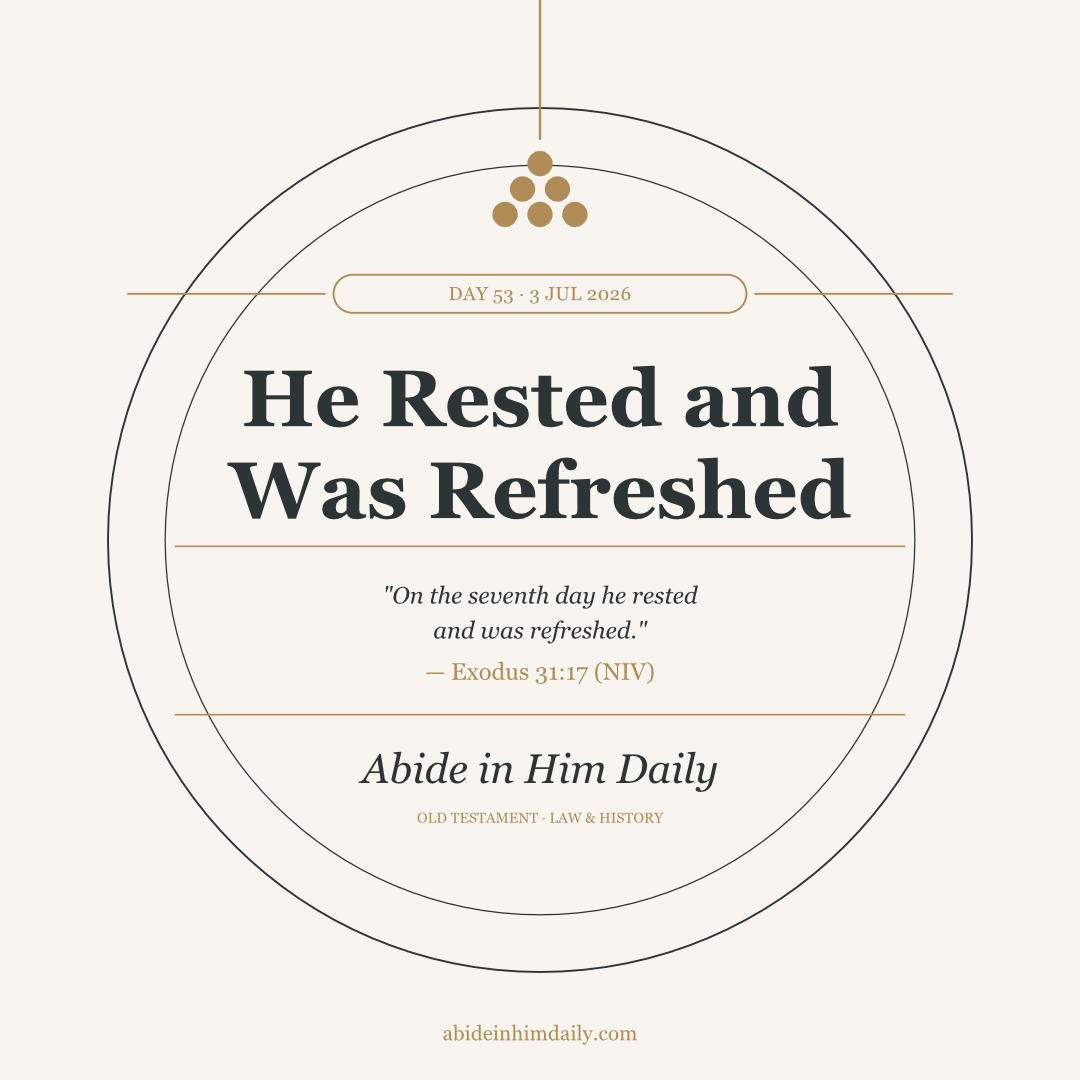
He Rested and Was Refreshed
Day 53 · Exodus 31:17
📖 TODAY’S SCRIPTURE
Exodus 31:17 (NIV)
“It will be a sign between me and the Israelites forever, for in six days the Lord made the heavens and the earth, and on the seventh day he rested and was refreshed.”
Today’s John 15 thread: Abiding in the Vine is not straining. The branch doesn’t work itself to exhaustion trying to produce fruit. It rests in connection. The Sabbath was God’s way of building that rhythm into His people, not as a burden but as a gift. Rest is not the absence of fruitfulness. It is part of how the Vine sustains the branch.
✍️ REFLECTION
Right in the middle of all the instructions for the tabernacle, God pauses to remind Israel about the Sabbath. Build the tabernacle, yes. Fill it with skill and craftsmanship and care. But do not forget to rest. The Sabbath is not a suggestion tucked in at the end. It is a sign, something that marks you as belonging to God.
And then the verse says something worth sitting with: on the seventh day God rested and was refreshed. That word “refreshed” in Hebrew carries the idea of taking breath, of being restored. God built rest into the rhythm of creation, and then He called His people to live inside that same rhythm.
Q1: What does rest actually look like in your life right now? Is there a real Sabbath in your week, a time when you stop and receive rather than produce? Or has rest become something you keep meaning to get to?
We live in a world that treats busyness as a virtue. The more you do, the more you are worth. But God built a different rhythm into the fabric of creation. Six days of work, and then stop. Not because the work is done, because it never is, but because rest is part of the design. Refusing to rest is not faithfulness. It is a quiet way of saying that things will fall apart if you stop, and that is not trust.
Q2: Is there an honest fear underneath your busyness, a feeling that things won’t hold together if you slow down? What would it mean to trust that the Gardener keeps the vineyard, even when you rest?
The Sabbath was also a sign between God and His people. It was meant to mark them as different from the nations around them. Everyone else worked seven days. Israel stopped on the seventh. That difference was visible, and it was intentional. Rest was a public statement that they belonged to a God who provides enough in six days that you don’t need the seventh.
Q3: Does the way you rest, or don’t rest, reflect your trust in God’s provision? Is there something you could lay down this week as an act of trust rather than obligation?
🌿 REMAIN IN HIM
Take a moment before you move on. This isn’t a to-do. It’s an invitation to stay.
Reflect honestly: When did you last truly rest? Not sleep, not entertainment, but genuine rest that left you refreshed. Is rest something you protect in your week, or something you sacrifice first?
Bring it to Jesus: Tell Him: “Lord, You built rest into creation and You called it good. Help me to live inside that rhythm. Help me to trust You enough to stop.”
Trust the Gardener: The Gardener tends the vineyard. He does not need you to be working every hour for the fruit to grow. Rest in Him. He is enough.
🙏 PRAYER
Father, I confess that I find it easier to keep going than to stop. Rest feels like a risk, like something might fall through if I am not on top of it. But You rested on the seventh day and called it good. Help me to trust You enough to do the same. Teach me to see rest not as lost time but as faithfulness, as a way of saying I believe You are enough. In Jesus’ name, Amen.
💡 MEMORY VERSE
Exodus 31:17 (NIV): “On the seventh day he rested and was refreshed.”
This post is part of the Abide in Him Daily devotional series, reading Scripture through the lens of John 15:1–17. The branch doesn’t manufacture the fruit. It bears it because it stays connected to the Vine.